Avoid hidden charges in Sudbury rubbish removal quotes
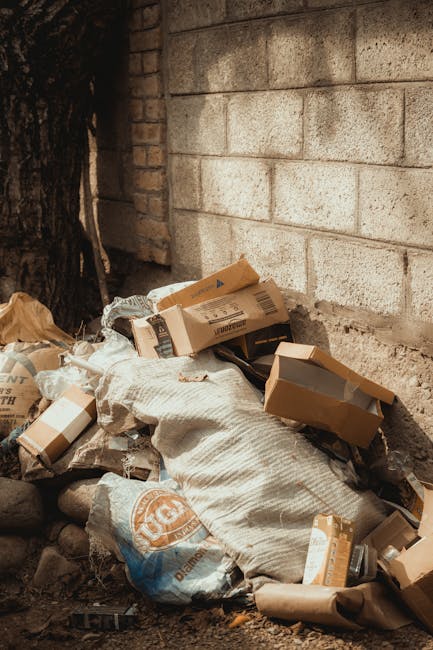
Getting rid of unwanted waste should feel straightforward, but anyone who has compared rubbish removal quotes knows how quickly a "cheap" price can grow legs. One minute you're looking at a tidy number, the next you're being told about labour extras, access fees, parking, item surcharges, or a mysterious minimum load charge. If you want to avoid hidden charges in Sudbury rubbish removal quotes, the trick is not just finding the lowest headline price. It's understanding what is actually included.
This guide breaks down how to read quotes properly, what questions to ask before you book, and where hidden costs usually creep in. It also covers practical steps for comparing providers in a fair way, plus a few real-world habits that save stress later on. Let's face it: nobody enjoys haggling over waste on a wet Tuesday morning. Better to know what you're paying for before the truck pulls up.
Why avoiding hidden charges matters
Hidden charges are more than an annoyance. They can turn a sensible clearance job into an expensive one, especially if you're dealing with bulky household items, a garden clear-up, or leftover renovation waste. In Sudbury, where many jobs involve tight driveways, terraced streets, or shared access, the final price can change if the provider hasn't priced the job properly from the start.
The real issue is trust. A quote that looks low but leaves out practical costs is not a bargain. It is a delay in disguise. You may be forced to choose between paying extra on the day or living with the mess a bit longer. Neither feels great.
When quotes are transparent, you can compare like with like. That matters whether you're clearing a garage, sorting out a rented flat, or shifting waste from a small business unit. It also helps you budget properly. Truth be told, most people do not mind paying a fair price. They just want the price they were promised.
There is another point here too: waste removal is often time-sensitive. If a job is urgent, people can feel pressured to accept the first quote that sounds reasonable. That is exactly when extra fees can sneak in. A calm check on the details now can save the awkward back-and-forth later.
Key takeaway: a good rubbish removal quote should explain what is included, what might change the price, and what happens if access, volume, or item type is different from the original estimate.
How avoiding hidden charges in Sudbury rubbish removal quotes works
The process is simple in principle, though the wording can get a bit murky. Most rubbish removal quotes are built around a few core factors: the volume of waste, the type of waste, the labour needed to load it, and how easy the property is to access. Some companies price by cubic yard or van load; others give item-based quotes for things like sofas, wardrobes, or white goods.
The problem starts when a quote is based on assumptions that are never written down. For example, the initial price may assume that all waste is stacked neatly outside, not carried from an attic. It may assume easy parking, no stairs, no sorting, no mattress disposal charge, and no wait time. Once the crew sees the real job, the quote changes. Sometimes fairly. Sometimes not.
To avoid that, the provider should explain the quote structure clearly before arrival. If there is a call-out fee, minimum charge, or disposal charge for certain materials, it should be stated up front. If the company needs photos to confirm pricing, send them. A few clear pictures of the waste pile, access route, and any awkward items can make all the difference.
In our experience, the smoothest jobs are the ones where both sides understand the job description. It sounds obvious, but a quote is only as good as the information behind it. A rough estimate is not a fixed price unless the business says so plainly.
You may also see differences between providers because some include labour, fuel, and disposal in one line, while others break the costs into pieces. That is fine, as long as the total is clear. The issue is not whether a quote has many parts; the issue is whether the parts are visible.
Key benefits and practical advantages
Clear quotes are not just nicer to read. They make the whole job easier to manage. When you understand what is included, you can decide whether to book, negotiate, or ask for a revised estimate before anyone lifts a bin bag.
- Better budgeting: you know the likely total before the work starts.
- Fewer surprises: less chance of a larger bill appearing on the day.
- Faster decisions: easier to compare rubbish removal providers fairly.
- Less stress: fewer awkward conversations when the crew arrives.
- More trust: transparent pricing usually signals a more professional service.
There's a practical side too. If you are clearing a home before a move, dealing with building waste after repairs, or emptying a rental property, timing matters. An unclear quote can stall everything. A clear one lets you plan the rest of your day instead of standing in the hallway wondering why the price has changed because of "extra weight".
One small but useful benefit is easier comparison shopping. If two quotes both include labour, loading, disposal, and VAT where relevant, you can compare the real cost rather than the marketing language. That is where you spot value properly.
Expert summary: the cheapest quote is not always the best value. The best value is the one that spells out the full job and holds to it.
Who this is for and when it makes sense
This approach is for anyone booking waste clearance in or around Sudbury who wants a fair, predictable bill. That includes homeowners, tenants, landlords, letting agents, tradespeople, shop owners, and office managers. If your job is small, you still benefit. If it is large and awkward, you benefit even more.
It makes sense in a few common scenarios:
- House clearances: when you need to empty rooms, lofts, garages, or outbuildings.
- Garden clear-ups: where green waste, soil, timber, and old fixtures may be priced differently.
- Builders' waste: where rubble, plasterboard, and mixed waste can trigger different charges.
- Furniture disposal: where heavy items or awkward stairs may affect labour cost.
- Business waste removal: where office access, lift use, and collection timing may matter.
If you're unsure whether your situation needs a formal quote or a quick estimate, think about the variables. The more uncertain the volume, access, or item type, the more important it is to confirm the details in writing. A one-bedroom flat clearance is rarely just a one-bedroom flat clearance. There's the hall cupboard, the loft hatch, the old wardrobe that won't fit round the landing... you know the sort of thing.
For bigger or more complex jobs, it can help to read related guidance such as pricing and quotes and browse specific clearance options like house clearance or builders waste clearance so you have a clearer sense of what your job actually involves.
Step-by-step guidance
Here is a practical way to avoid hidden charges before you book.
- Describe the waste clearly. Say what items you have, how much there is, and whether any of it is bulky, heavy, sharp, or fragile.
- Explain the access. Mention stairs, narrow paths, parking restrictions, rear access, lift use, or long carrying distances.
- Ask what the quote includes. Labour, loading, transport, disposal, sorting, and VAT should all be clear.
- Ask what could change the price. Good providers will explain the triggers: extra volume, unexpected materials, difficult access, or additional waiting time.
- Request a written quote. Email, text, or message is better than relying on memory. It does not need to be fancy.
- Check item exclusions. Some materials need special handling, so ask if anything is treated differently.
- Compare more than price. Look at clarity, responsiveness, and whether the provider answers questions directly.
- Reconfirm on the day if needed. If the job changed since the quote, say so before work starts.
Photos are useful, and not just a few random snaps. Take wide shots, close-ups of awkward items, and one picture showing the access route if it matters. A dim garage at 8am can look a lot smaller once a van crew turns up. That little bit of context helps everybody.
One simple rule works well: if a provider cannot explain the quote in plain English, pause. Ask again. A good service should be able to say, without dancing around, why the price is what it is.
Expert tips for better results
Small habits make a big difference when comparing waste removal quotes. These are the details that usually separate a clean booking from a frustrating one.
Ask for the total, not just the headline
A low starting figure can look attractive, but the total matters more. Ask whether the price includes labour, disposal, vehicle costs, congestion or parking complications if relevant, and any minimum charge. Keep asking until the answer is unambiguous.
Be honest about volume
People sometimes understate how much waste they have, hoping to keep the price down. Understandable, but it often backfires. If the load is bigger than described, the quote can change. A more accurate description usually gets a more accurate price first time.
Watch for vague wording
Phrases like "subject to inspection" or "starting from" are not automatically bad, but they should be explained. A decent company will tell you exactly what inspection means and when a price becomes fixed. If the wording feels slippery, trust that instinct.
Check special item charges
Some items may be treated differently because of weight, size, or disposal requirements. That can include mattresses, fridges, appliances, or mixed construction waste. Ask before you book, not after the van arrives and everyone starts looking at the item with that mildly concerned expression.
Compare the same service type
Do not compare a full labour-assisted clearance with a curbside collection and assume they are the same thing. They are not. If one provider loads everything from inside the property and another expects you to move items outside, the prices should differ.
Keep a paper trail
Save the quote, the messages, and any photos you sent. If something changes, confirm it in writing. This is not being awkward. It is being sensible.
For extra peace of mind, you can also review a company's broader service pages such as waste removal or furniture disposal to understand how they frame the work and whether their descriptions line up with the quote they give you.
Common mistakes to avoid
Most hidden-charge problems come from a handful of avoidable mistakes. None of them are dramatic on their own, but together they can make a quote feel misleading.
- Assuming all quotes mean the same thing. They rarely do unless the scope is identical.
- Ignoring access issues. Long carries, stairs, and awkward parking matter more than people expect.
- Not asking about VAT. If VAT applies, it should be clear before you agree to anything.
- Forgetting special items. Appliances, mattresses, rubble, and mixed waste can be priced differently.
- Relying on verbal promises only. Helpful in the moment, less helpful later.
- Choosing purely on price. A lower quote can be a false economy if it leaves out labour or disposal.
Another common one: people send a single blurry photo and hope for a fixed quote. Sometimes that works. Often it doesn't. Better to take an extra minute and send enough detail to make the estimate realistic. It saves back-and-forth and, frankly, a bit of irritation.
And yes, sometimes the cheapest quote really is the best option. But only when it is transparent. Cheap and unclear is a dangerous mix.
Tools, resources and recommendations
You do not need fancy software to compare rubbish removal quotes well. A simple system is usually enough.
- Phone photos: take a few clear pictures before asking for a quote.
- Notes app or checklist: list item types, rough volume, access issues, and deadlines.
- Email or messaging thread: keep the quote in writing where possible.
- Measuring tape: useful for large furniture, piles of waste, or tight doorways.
- Calendar reminders: handy if you need to compare several providers before booking.
If you are comparing providers more broadly, pages like recycling and sustainability, insurance and safety, and health and safety policy can help you judge whether a company takes its responsibilities seriously, not just its sales pitch.
For jobs that involve multiple rooms or a mix of furniture and general waste, it can also help to look at related services such as garage clearance, loft clearance, or garden clearance. These pages often reveal how a provider structures different types of work, which gives you a better feel for the quote you are receiving.
Law, compliance, standards and best practice
Waste removal is not just a practical service; it also sits within wider UK waste-handling expectations. You do not need to become a legal expert, but it is wise to deal with businesses that are careful about responsible disposal, paperwork, and safe handling.
As a customer, your main concern is usually whether the waste is taken away properly and whether the provider is working in a professional way. That means a few things in plain English: they should be clear about what they collect, what they cannot collect, how they handle different waste types, and how they protect people and property during the job.
Good best practice normally includes:
- clear written quotes and job descriptions
- transparent pricing for labour and disposal
- safe lifting and loading procedures
- appropriate handling of bulky or hazardous materials where applicable
- careful communication about anything that may alter the final price
For business customers in particular, it is sensible to check whether the provider can support your record-keeping and site requirements. If you are booking office or commercial clearance, a page such as office clearance or business waste removal can help you understand the style of service offered before you request a quote.
Also, if a company appears vague about insurance, safety, or how it handles complaints, that is a yellow flag. Not a panic button, just a yellow flag. You want a provider that can explain its process clearly and stand behind the work if something goes wrong.
Options, methods, or comparison table
When it comes to rubbish removal quotes, there are a few common pricing styles. Each can be fine if the terms are clear. The point is to know what you are comparing.
| Pricing method | How it works | Potential hidden charge risk | Best for |
|---|---|---|---|
| Fixed quote | One agreed price based on the described job | Low, if scope is documented properly | Clear jobs with good photos and straightforward access |
| Estimate | Approximate price that may change after inspection | Medium to high if conditions differ from what was described | Jobs where volume or access is uncertain |
| Load-based pricing | Cost depends on how much space the waste takes in the vehicle | Medium, especially if the load is packed unevenly | Mixed household waste, furniture, general clearance |
| Item-based pricing | Each item or item type has a set charge | Medium, if items have special disposal needs | Single items, appliances, furniture removal |
| Labour-plus-disposal pricing | Labour and disposal are shown separately or bundled with add-ons | Medium if add-ons are not disclosed early | Complex jobs or heavier clearances |
In simple terms, a fixed quote is often the easiest to manage, but only if the details are accurate. An estimate can still be useful, especially for uncertain jobs, as long as you know what would change the price. The worst option is not a pricing style as such; it is vague pricing with no explanation.
Case study or real-world example
A typical example: a homeowner in Sudbury wants a garage cleared after years of clutter building up. The garage holds old shelving, a broken freezer, a couple of wardrobes, paint tins, and assorted bags of mixed waste. The first quote sounds excellent. Then the customer mentions the freezer, the narrow side path, and the fact that everything is at the back of the garage. The price changes.
At first glance, that might feel annoying. But in reality, the second quote is usually the more honest one because it reflects the actual job. The key is whether the change is explained clearly before the booking is confirmed. If the provider says, "We priced for a simple garage load, but the appliance and access mean extra labour," that is fair enough. If the extra appears with no explanation once the crew arrives, that is where trust starts to wobble.
Another common scenario is a landlord clearing a flat between tenants. The job looks light from the hallway, but once the cupboard doors open there is more waste than expected, plus a mattress and a heavy wardrobe. The better providers ask for photos and ask direct questions before giving a quote. That stops the whole thing turning into an expensive guessing game.
The lesson is simple: a proper quote is built on facts, not optimism. A little extra detail up front can spare everyone a lot of faff later.
Practical checklist
Use this quick checklist before you agree to any rubbish removal quote.
- Have I described the waste clearly?
- Have I included photos or video where useful?
- Did I mention stairs, narrow access, parking, or long carrying distances?
- Did I ask whether labour, loading, disposal, and VAT are included?
- Did I ask about any special item charges?
- Is the quote written down somewhere I can refer back to?
- Do I understand what could cause the price to change?
- Am I comparing the same level of service between providers?
- Does the company seem clear and responsive when I ask questions?
- Am I comfortable that this is a fair, transparent price rather than just the lowest number?
If you can tick most of those off, you are in a much stronger position. Not perfect, maybe, but much stronger. And that counts.
Get a free quote today and see how much you can save.
Conclusion
To avoid hidden charges in Sudbury rubbish removal quotes, focus on clarity rather than chasing the lowest headline price. Ask what is included, confirm what might change the cost, and keep the details in writing. That simple habit protects your budget and makes the whole booking process calmer.
When a company explains its pricing properly, you can make a confident choice. You know where you stand. You know what the job covers. And, just as importantly, you know what won't suddenly appear on the bill at the end of the day.
If you are clearing a home, a garden, an office, or a pile of builders' waste, take the extra minute to compare properly. It really does pay off. A clear quote is one of those small things that makes a stressful job feel manageable, and sometimes that is worth a lot more than a low number on a screen.
And once the clutter is gone and the space opens up again, you'll be glad you handled the quote carefully. That quiet sense of relief? Hard to beat, truth be told.
Frequently Asked Questions
What counts as a hidden charge in a rubbish removal quote?
A hidden charge is any extra cost that was not clearly explained before you agreed to the job. Common examples include labour extras, access fees, minimum charges, special item surcharges, or disposal costs that were only mentioned later.
How do I compare rubbish removal quotes fairly?
Compare quotes only when they cover the same scope of work. Check whether loading, labour, disposal, VAT, and any access complications are included. A cheaper quote may simply leave out more of the job.
Should I ask for a written quote?
Yes, absolutely. A written quote gives you something to refer back to if the price changes. Even a message or email is better than relying on a verbal conversation that could be remembered differently later.
Why do some quotes change after the crew arrives?
Usually because the actual job turns out to be different from what was described. That can mean more waste, harder access, extra carrying distance, or items that need special handling. Sometimes the change is fair; sometimes it means the original quote was too vague.
Are the cheapest quotes usually the best value?
Not always. The best value is a quote that is clear, complete, and realistic. A very low quote can look attractive, but if it excludes labour or disposal, it may end up costing more in the end.
What details should I give when asking for a quote?
Give the type of waste, the rough amount, any bulky or heavy items, access details, parking issues, stairs, and whether the job is urgent. Photos help a lot, especially for larger clearances.
Do I need to mention stairs or narrow access?
Yes. Stairs, tight hallways, long walks from the property to the vehicle, and awkward parking can all affect labour time and therefore the price. Leaving these out is one of the easiest ways for a quote to change later.
Can I avoid extra charges by moving waste outside myself?
Sometimes that helps, but only if the provider offers a curbside or outside collection service. If they are quoting for full loading from inside the property, moving waste outside may not reduce the price as much as you expect.
How do I know if a company is being transparent?
Transparent companies answer questions directly, explain what is included, and state what could change the price. They do not dodge basic questions or hide behind vague terms when you ask for clarification.
What if the quote seems unclear?
Ask for a breakdown. If you still cannot get a straight answer, that is a sign to pause and compare other providers. A quote should make the booking easier, not leave you guessing.
Is VAT usually included in rubbish removal quotes?
Not always. Some companies include it in the headline price, while others add it later. Ask directly so you know whether the total you see is the total you will pay.
When is it worth requesting a same-day quote?
Same-day quotes can be useful for urgent clearances, but only if the provider still gives enough detail to avoid surprises. Speed is helpful; clarity still matters more. A rushed quote with hidden extras is not a shortcut, it's a headache.
What is the best way to reduce the chance of extra costs?
Be accurate, send photos, mention access problems early, and get the price in writing. That combination cuts down the risk more than anything else. Small effort now, less stress later.